 (1).svg)

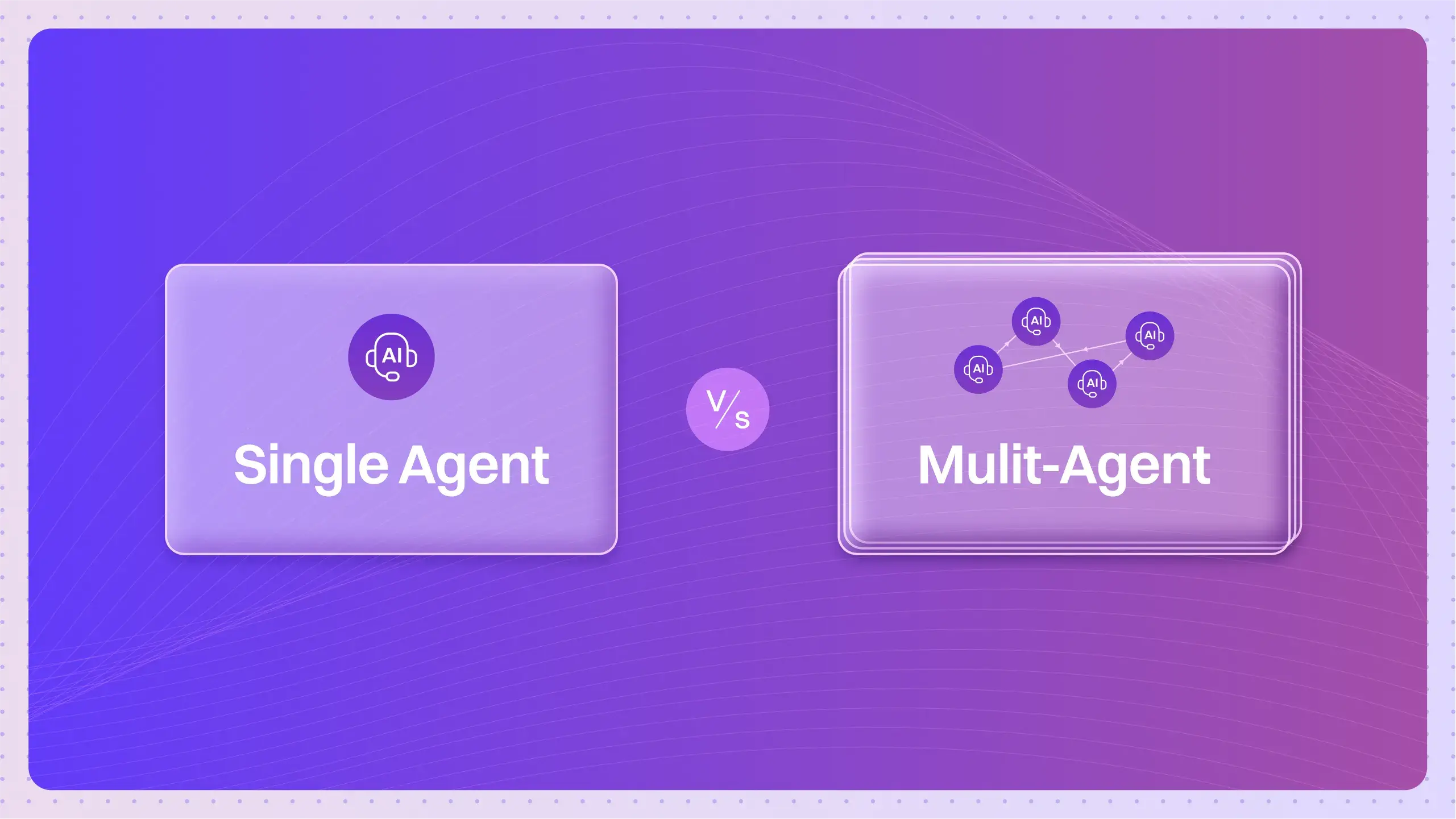
The future of work with ai agents is no longer about a single bot handling everything. In 2026, the conversation has shifted decisively toward multi agent ai systems where specialized agents collaborate to tackle complex business workflows. If your company is still relying on one-size-fits-all AI tools, you are already behind.
Gartner reported a 1,445% surge in multi-agent system inquiries between Q1 2024 and Q2 2025. That is not a typo. Enterprises, startups, and agencies alike are recognizing that the solo-agent model cannot keep up with multi-step, cross-platform processes. The era of agentic ai orchestration has arrived.
What Are Multi-Agent AI Systems and Why Do They Matter?
A multi agent ai system is a setup where multiple specialized AI agents work together, each handling a distinct part of a process. One agent qualifies leads, another drafts personalized outreach, and a third checks compliance. They share context and hand off work without human intervention.
Think of it like a well-run team. You would not hire one person to do sales, marketing, support, and accounting. The same logic applies to AI. Single agents hit a ceiling when tasks require reasoning across multiple tools, data sources, or decision steps. Collaborative ai agents break through that ceiling by dividing labor intelligently.
Gartner predicts that by 2026, 40% of enterprise applications will feature task-specific AI agents, up from less than 5% in 2025. Both Forrester and Gartner see 2026 as the breakthrough year for multi-agent coordination under central orchestration.
The Shift From Solo Agents to Agentic AI Orchestration
The AI industry is going through what many analysts compare to the microservices revolution in software. Just as monolithic applications gave way to distributed architectures, single all-purpose agents are being replaced by orchestrated teams of specialists.
This shift toward agentic ai orchestration is driven by three factors. First, complexity. Modern business workflows span CRM, Slack, email, databases, and more. No single agent can handle all of these touchpoints effectively. Second, reliability. When one agent fails in a multi-agent setup, the others continue operating. Third, scalability. You can add new specialized agents without rebuilding your entire system.
At LeSage Digital, this is exactly how we build workflow automations that connect your tools. We design systems where AI agents handle lead qualification, data enrichment, CRM updates, and Slack notifications as a coordinated unit. The result: processes that run 24/7 without manual intervention.
Real-World Use Cases for AI Agent Collaboration
Where does ai agent collaboration deliver the most value today? Several industries are already seeing measurable results.
Sales and Lead Management
One agent scrapes prospect data from Google Maps or LinkedIn. A second agent enriches the data with email addresses and company details. A third scores and routes qualified leads to the CRM. A fourth triggers a personalized outreach sequence. This entire pipeline runs without a single manual step.
Customer Support
A front-line agent handles FAQs and common requests. When a query exceeds its scope, it escalates to a specialized agent that pulls account history from the CRM and drafts a detailed response. Complex cases get flagged for human review with full context already attached.
Operations and Reporting
Agent teams can pull data from multiple platforms, consolidate it into a unified report, and push summaries to Slack or Notion on a set schedule. No more manual copy-paste across dashboards.
The Future of Agentic AI: What Comes Next
The future of agentic ai is about standardization and interoperability. New protocols like Anthropic’s MCP (Model Context Protocol) and Google’s A2A are enabling agents from different vendors to communicate seamlessly. IBM’s Kate Blair confirmed that 2026 is when these patterns move from the lab into real life.
IDC expects AI copilots to be embedded in nearly 80% of enterprise workplace applications by 2026. Google Cloud’s latest agent trends report describes this as the shift from simple prompts to “digital assembly lines” that run entire workflows semi-autonomously.
For small businesses and agencies, this means the tools that were once exclusive to enterprises are becoming accessible. No-code and low-code platforms now support multi-agent setups, making ai agent task delegation and coordination achievable without a dedicated engineering team.
How to Get Started With Multi-Agent Systems
You do not need to overhaul your entire tech stack overnight. Start by identifying the repetitive, multi-step workflows that consume the most time in your business. Common starting points include lead qualification pipelines, customer onboarding sequences, and reporting workflows.
If you want to see what this looks like in practice, explore how LeSage Digital builds AI-powered automation systems that coordinate multiple agents across your existing tools. We connect CRMs, Notion, Slack, email platforms, and more into unified workflows that save 10 to 20 hours per week.
The shift toward multi agent ai systems is not a trend to watch from the sidelines. It is the new baseline for how competitive businesses operate. The companies that adopt agent orchestration now will have a significant operational advantage as the technology matures.